Introduction to its impact and creativity. Presentation of its advantages, disadvantages, potential risks, and benefits. This is followed by a workshop where you can quickly create your artificial intelligence model capable of recognising images, sounds, and more.

The DigitalFashion project, funded by the ERASMUS+ programme of the European Commission, presents innovative methods of digitisation in fashion. The aim is to train students and professionals to use critical technologies in the virtual design and fitting of personalised garments. Participants will be introduced to a 3D virtual fitting platform based on three databases (avatars, textiles, garments) contributing to a…
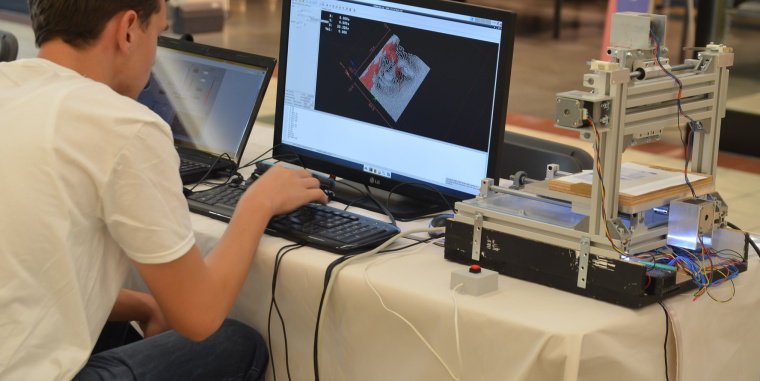
We will unveil what organisational science encompasses and present the research work of the Faculty of Organizational Sciences, focusing on various aspects of this field. We aim to stimulate curiosity, especially among young people contemplating their career paths.
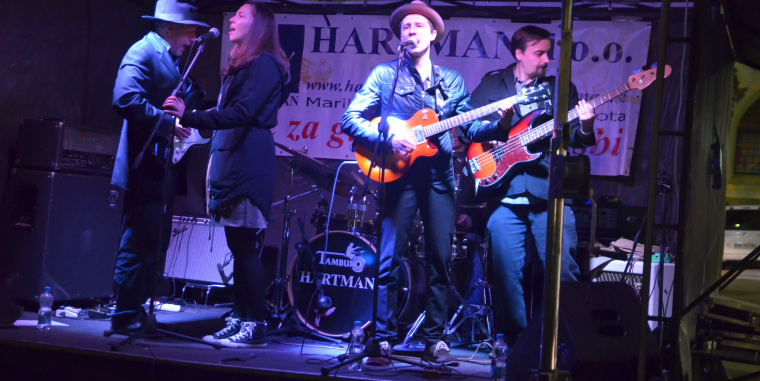
Various compositions connected by the principles of topology will be performed.
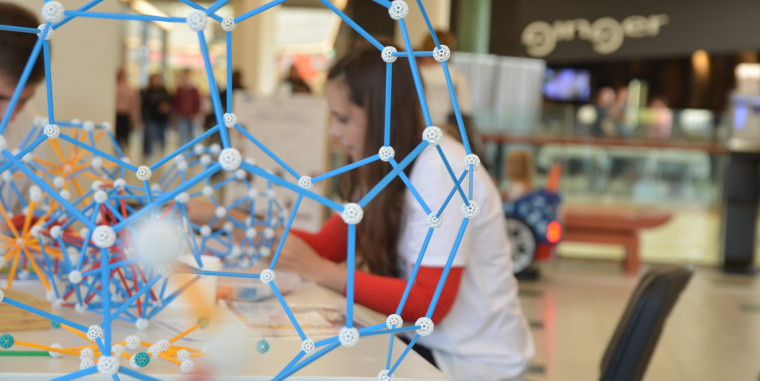
How do we solve practical problems in a field usually considered one of the most challenging and theoretical ones in mathematics?
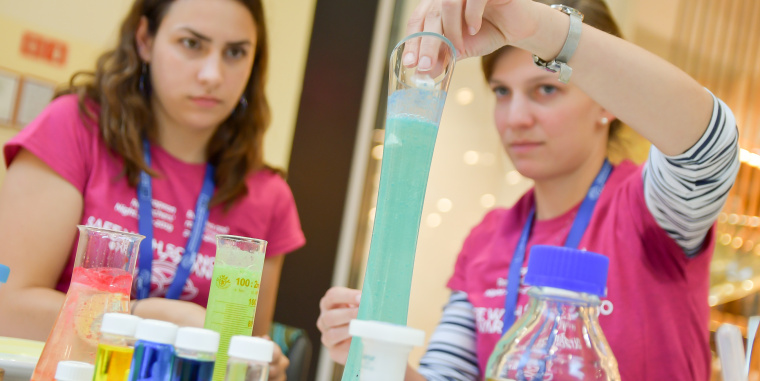
Colours have an influence on our moods, and our actions. Therefore, in presenting chemical experiments, we aim to include visually appealing ones. We will delve into more straightforward experiments, demonstrate the hidden colours in seemingly unattractive substances, proceed to slightly more complex redox reactions and coordination chemistry, and explore the colourful diversity of chemical compounds.
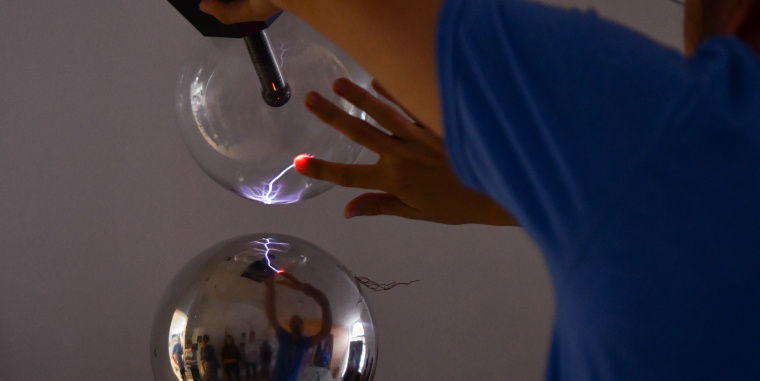
The exhibition of different magnetic experiments includes: – Gaussian cannon: a magnet attracts an iron ball, which is transferred to another ball attracted by another magnet – Magnetic machine: shows the Curie temperature, where the magnet cools and remagnetises – Free-falling magnet in a copper tube: the magnet changes the magnetic field density, triggering induced currents and generating forces in…
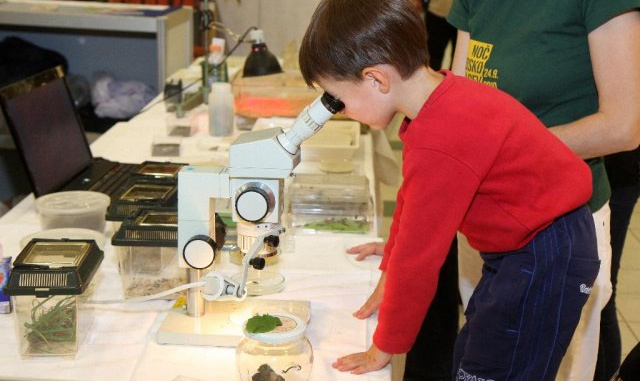
In the workshop, we will showcase exciting plant structures and closely examine leaf surfaces. Participants will be able to observe fascinating plant structures with a microscope and magnifying glass, create imprints of leaf surfaces and examine them under a microscope.
The workshop focuses on invasive alien species of plants and animals that are increasingly present in our environment. Have you ever noticed them? Where?
Could you recognise the lesser-known animals that live in our environment? You will notice many small and slightly larger creatures that reside near our homes, but you may not know them well. Are you interested in learning about these animals and would you recognise them? Join us and get to know them!